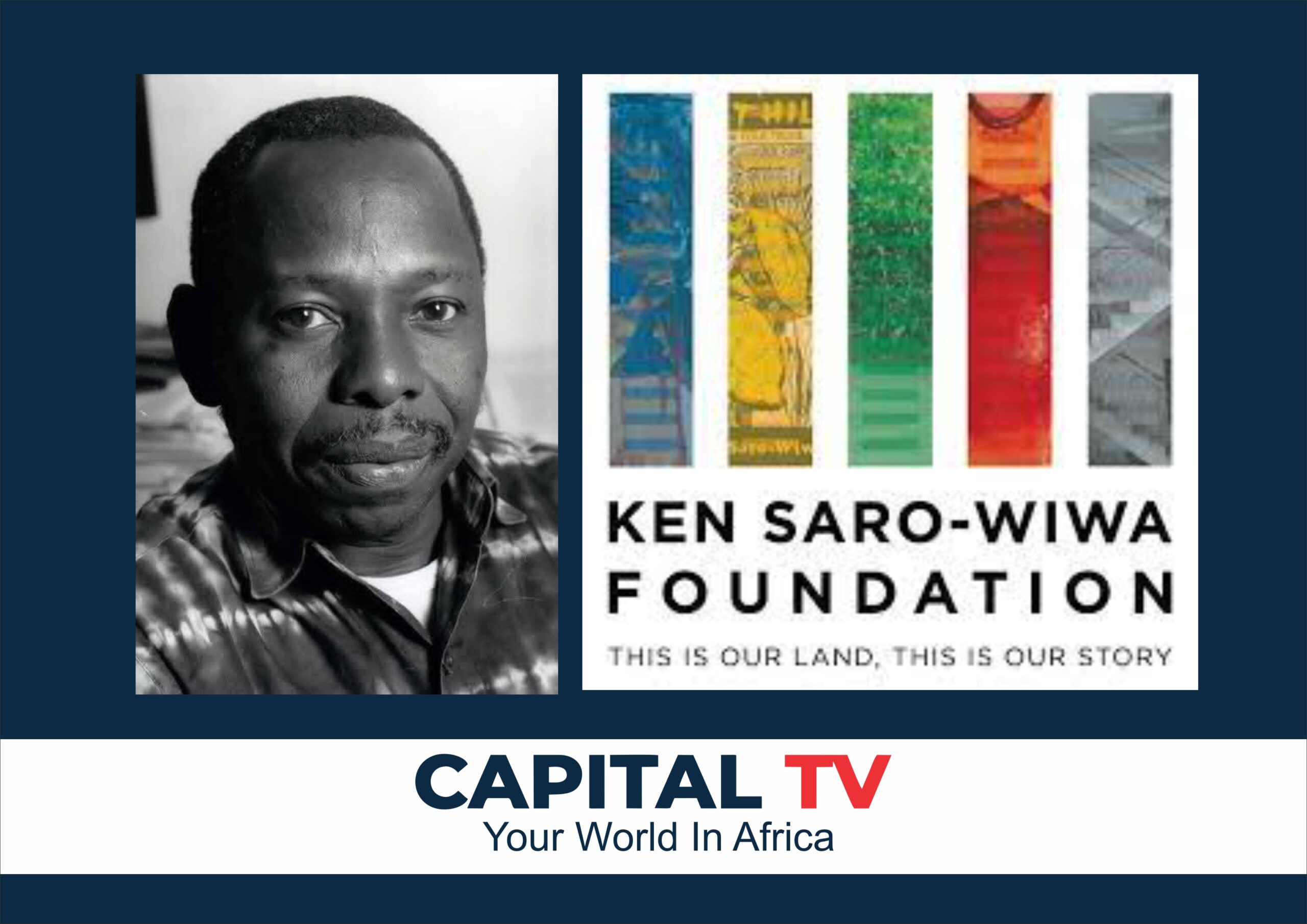
The Ken Saro-Wiwa Foundation has disowned a widely circulated photograph and accompanying news report, which claimed a “Record of Restorative Reconciliation and Collaboration in Ogoniland,” calling the materials “fake” and “stage-managed.”
In a statement signed by Dr. Owens Wiwa, the Foundation said the event, centered on a tree-planting exercise, was neither authorized nor supported by the organisation or the Saro-Wiwa family. According to the statement, Zina Saro-Wiwa, the daughter of Ken Saro-Wiwa, was “tricked” into attending the event, which was allegedly orchestrated by a former head of the organizing committee who has since been dismissed by the Foundation. The trees planted during the exercise have already been removed, the group said.
The Foundation stressed that despite suggestions in the disputed report, there has been no reconciliation between the Saro-Wiwa family and Shell, now operating under the name Renaissance. It reiterated that both Shell/Renaissance remain “persona non grata in Ogoni.”
The statement renewed long-standing accusations against Shell, asserting that the company must be held accountable for environmental devastation in Ogoniland and for the role it allegedly played in the military repression of the 1990s, including the operations led by the late Major Paul Okuntimo. It insisted that full environmental remediation remains an unresolved obligation.
While acknowledging ongoing clean-up efforts by the Hydrocarbon Pollution Remediation Project (HYPREP) as “a good first step,” the Foundation argued that technical remediation alone is insufficient. It called for political dialogue on the creation of a Bori State as a pathway to Ogoni autonomy and a necessary step toward genuine reconciliation between the Ogoni people and the Nigerian government.
The organisation condemned what it described as “surreptitious” attempts by “agents of Shell and security operatives” to manufacture an image of peace, insisting the Ogoni people “will not capitulate” to such efforts.
The statement reflects continued tensions nearly three decades after the execution of writer and activist Ken Saro-Wiwa and eight other Ogoni leaders, killings that remain central to ongoing disputes over oil extraction, environmental justice, and political autonomy in the Niger Delta.