
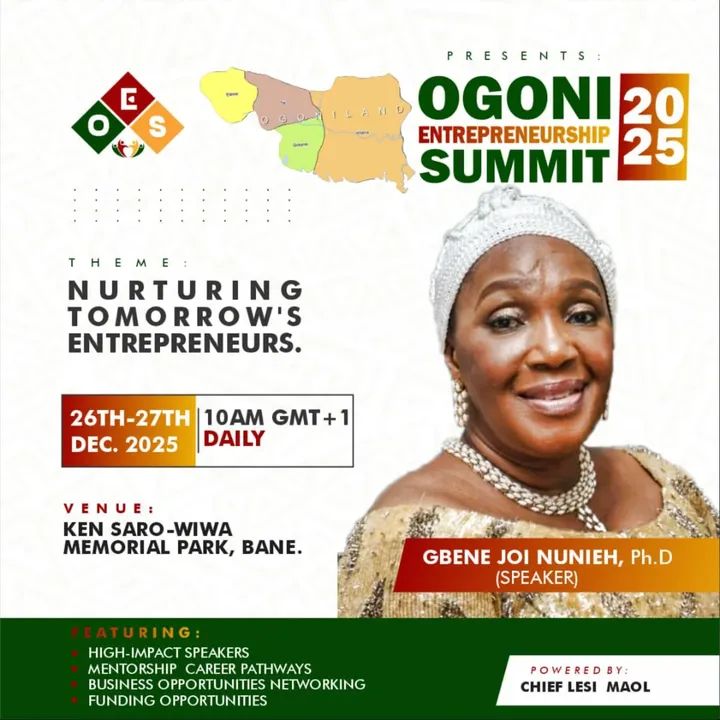
The first session of Day Two at the Ogoni Entrepreneurship Summit opened on a highly inspiring note as Gbene Dr. Joi Nunieh took the stage, drawing warm applause from the audience in recognition of her long-standing contributions to the socio-economic development of Ogoniland.
In her opening remarks, Gbene Dr. Joi shared a personal milestone, recalling that she attended her first official event in Ogoniland at the age of 29. Now, at 60, she described her participation in the Ogoni Entrepreneurship Summit as a moment of pride and fulfillment. She praised the summit as a landmark initiative and described it as an event every Ogoni person should be proud to associate with, noting its significance in reshaping the economic narrative of the region.
Addressing issues of youth and women empowerment, Gbene Dr. Joi delivered a strong message to young people, particularly young girls, urging them to move beyond survival strategies that undermine their dignity and long-term prospects. She challenged prevailing mindsets and encouraged Ogoni youths to recognize their inherent entrepreneurial abilities, stressing that the Ogoni people are no less enterprising than any other ethnic group in Nigeria. According to her, entrepreneurship has always been embedded in Ogoni culture and must be deliberately rediscovered and strengthened.
To reinforce her point, she shared her own entrepreneurial journey, revealing that she started her first business while still in school. By leveraging a washing machine purchased by her sister, she established a small laundry business that provided income and valuable business experience. This, she explained, was proof that entrepreneurship often begins with identifying opportunities within one’s immediate environment and making purposeful use of available resources. She commended the Convener of the summit, Chief Lesi Maol, for recognizing this entrepreneurial spirit and creating a platform that nurtures it.
Speaking further on gender roles, Gbene Dr. Joi highlighted the historical significance of women in Ogoni society, noting that Ogoni communities were traditionally matrilineal and that women have long been revered and entrusted with responsibility. She emphasized that empowering women economically is not a new concept but a return to foundational Ogoni values.
In an appeal, she called on the Convener and stakeholders to pay closer attention to Ogoni women who sustain their families through menial and informal jobs, describing their efforts as heroic acts of resilience. She urged that small-scale business financing initiatives be expanded to include these women. Additionally, she encouraged women to form cooperative societies as a means of pooling resources, strengthening their enterprises, and improving access to financial support, while calling on the wider community to actively support women-led businesses.