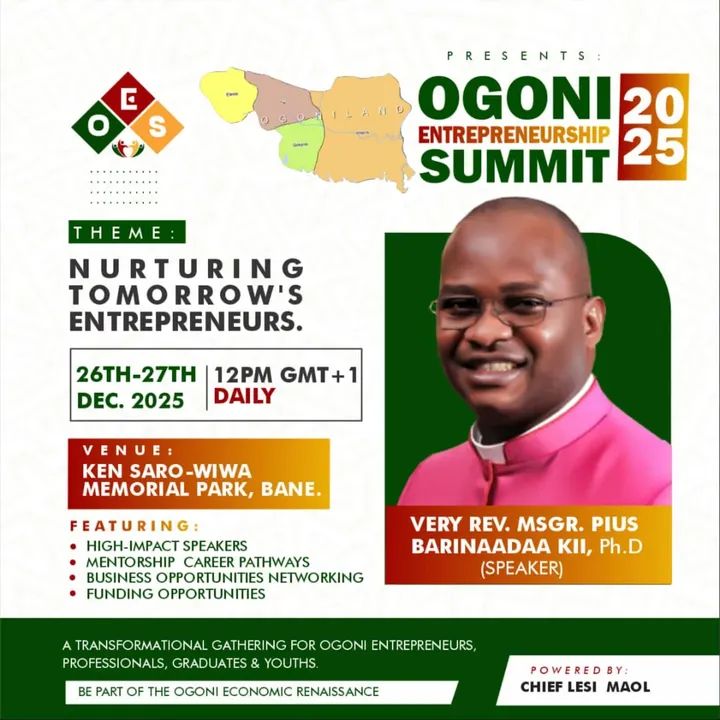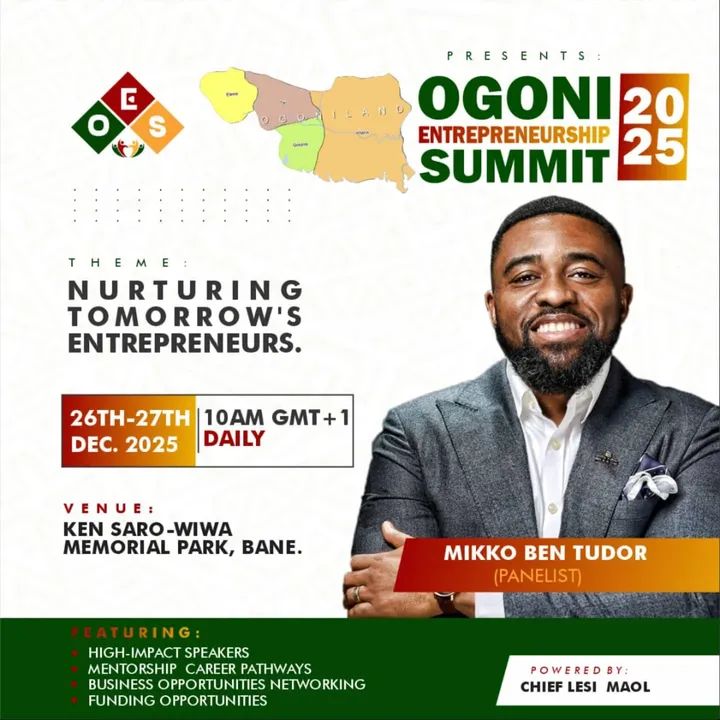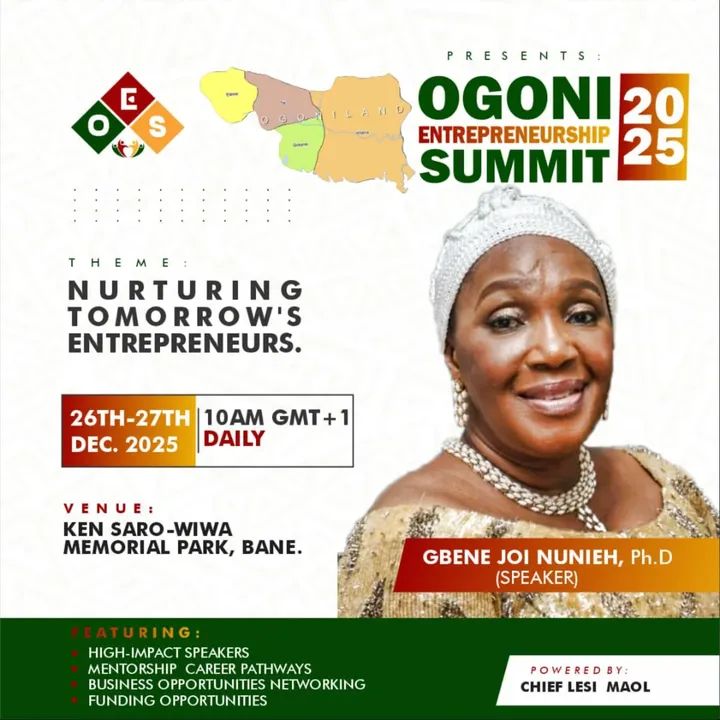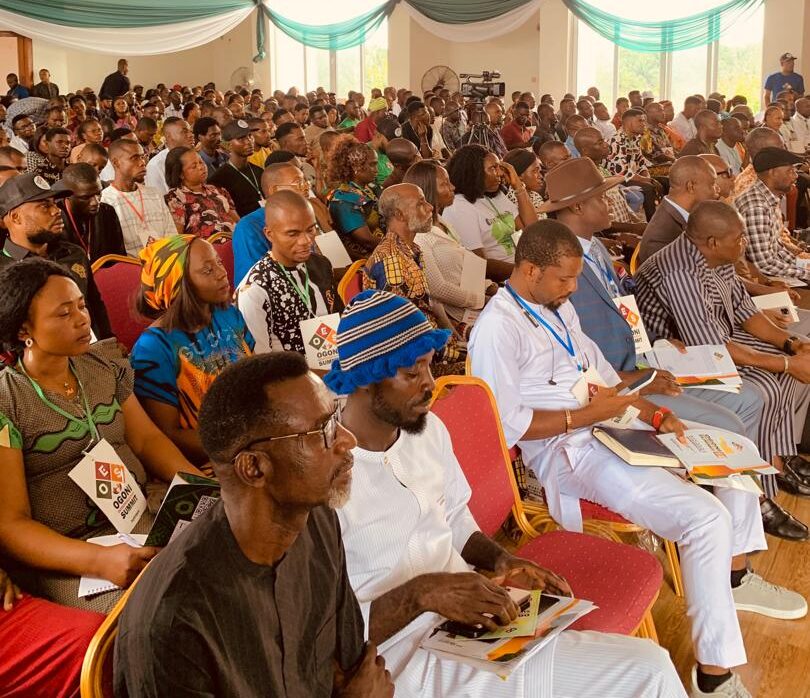
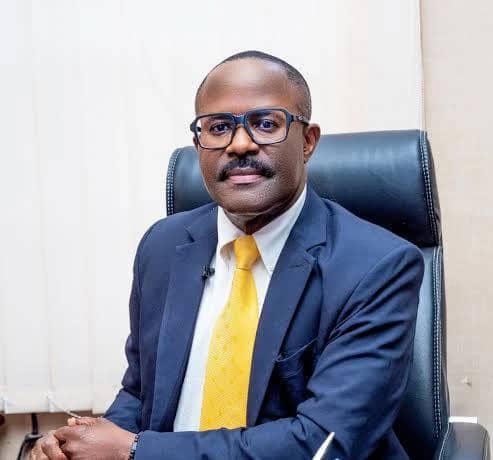
One of the standout sessions at the Ogoni Entrepreneurship Summit featured renowned political economist and business strategist, Prof. Magnus Kpakol, whose address challenged young people to rethink their approach to economic empowerment and nation-building. Drawing from decades of experience in economic planning and development initiatives across Africa, Prof. Kpakol delivered a thought-provoking session centered on initiative, knowledge, and self-driven development.
He began by emphasizing that sustainable livelihoods cannot be built on dependence. According to him, young people must move away from the expectation that government or external forces will provide solutions and instead take personal and collective initiative in creating economic value. He stressed that entrepreneurship thrives where individuals are willing to take responsibility for transforming ideas into viable ventures.
To illustrate his point, Prof. Kpakol referenced China’s economic transformation, noting that before 1978, the country was largely classified as a third-world economy. Its turnaround, he explained, was not accidental but the result of a deliberate shift toward entrepreneurial thinking, innovation, and productivity. He highlighted that China’s growth became possible because its people embraced the discipline of converting ideas into tangible development outcomes, a lesson he believes is highly relevant for Nigeria and Ogoniland.
A major theme of his presentation was the importance of knowledge acquisition. Prof. Kpakol stressed that knowledge remains the most valuable capital for any entrepreneur, noting that financial resources often follow competence and insight, drawing inferences from his business concept. He shared personal experiences of pursuing knowledge in unfamiliar fields, describing how curiosity and continuous learning shaped his professional journey and prepared him for leadership roles in economic development.
Addressing one of the most pressing challenges facing entrepreneurs, Prof. Kpakol acknowledged that access to business capital remains a major constraint in Ogoniland and across Nigeria. However, he challenged the narrative of scarcity, arguing that resources exist in abundance but are often poorly harnessed or mismanaged. According to him, when human capital, natural resources, and local innovation are effectively utilized, capital creation becomes a natural outcome rather than a barrier.
Reflecting on his experience as a public office appointee, Prof. Kpakol also called on government at all levels to uphold integrity and accountability, noting that ethical leadership is essential for creating a business-friendly environment. He asserted that Nigeria does not need external intervention to resolve its investment challenges, as the country already possesses the human and material resources required to build a thriving economy.
His session left participants with a clear message that the future of entrepreneurship in Ogoniland depends on initiative, knowledge, integrity, and the collective willingness to turn ideas into action.