Joel Nwankwo

Joel Nwankwo is a seasoned analyst with an ability to transform intricate data into engaging narratives. He is interested in telling African stories as it relates to people, money, and lifestyle within the complex intersection of business and economics.

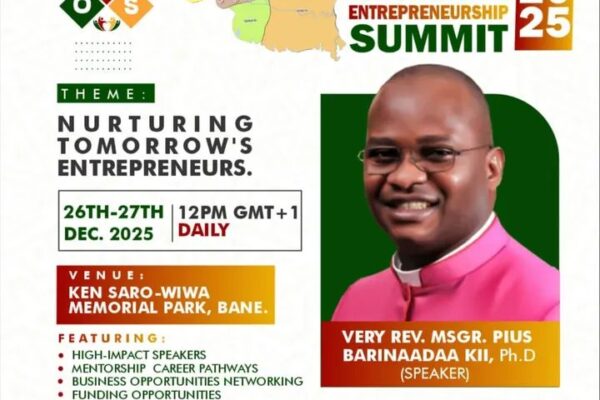
Very Rev. Msgr. Pius Barinaadaa Kii

Building Businesses with Purpose: Very Rev. Msgr. Pius Barinaadaa Kii on Why Ethics Matter in Entrepreneurship

In another session at the Ogoni Entrepreneurship Summit, Very Rev. Msgr. Pius Barinaadaa Kii delivered a values-driven address that highlighted the importance of leadership, discipline, and ethical conduct in building sustainable businesses. He began by expressing gratitude to God for the life and vision of the Convener, Chief Lesi Maol, whom he described as a gift divinely orchestrated for the advancement of the Ogoni people. Very Rev. Msgr. Pius praised Chief Lesi Maol for his consistent and selfless contributions to the growth of the Ogoni business and development landscape. He noted that while many individuals have served in public capacities representing the Ogoni people over the years, few have demonstrated the level of commitment, wisdom, and foresight shown by the convener. According to him, Chief Lesi’s dedication to empowering entrepreneurs and fostering economic progress reflects a rare depth of leadership and service. He emphasized that the respect and admiration held for the convener were key motivations behind the strong turnout at the summit. Speaking on the theme “Discipline and Human Values as the Basis for Business Success,” Very Rev. Msgr. Pius addressed the moral foundations required for sustainable entrepreneurship. He observed that many individuals in positions of influence often display a lack of ethical conduct, despite their status, noting that such contradictions undermine long-term success and societal trust. He stressed that genuine business growth must be guided by discipline and adherence to universally accepted ethical standards. According to the speaker, ethics serve as a moral compass that helps individuals distinguish between right and wrong in every situation they encounter. He emphasized that entrepreneurs who operate without ethical boundaries may achieve short-term gains but ultimately risk reputational damage and failure. In contrast, businesses built on integrity, accountability, and respect for human values are more likely to earn trust, attract partnerships, and achieve lasting success. Very Rev. Msgr. Pius Barinaadaa Kii further advised entrepreneurs to begin their ventures with the right intentions and to consistently uphold morally sound actions in their dealings. He acknowledged that kindness and ethical conduct may appear to be diminishing in society, including within Ogoniland, but emphasized that these values must be deliberately cultivated and sustained.


Read More
Mikko Ben Tudor

Mikko Ben Tudor Calls for Integrity-Driven Entrepreneurship in Ogoniland

Another impactful session on Day Two of the Ogoni Entrepreneurship Summit featured Mikko Ben Tudor, who began his address by expressing appreciation to the organizers for the opportunity to engage with participants. He described the summit as a timely and strategic platform, asserting that the next phase of business and economic transformation in Ogoniland will be driven by the very individuals present at the event. In setting the tone for his session, Tudor emphasized that the core objective of the summit is to inspire self-reliance and proactive entrepreneurship among Ogonis. He noted that sustainable development cannot be achieved through dependency or political patronage, stressing that the era of waiting for handouts must give way to a culture of value creation and initiative. According to him, entrepreneurship flourishes when individuals take responsibility for their growth rather than relying on external interventions. A central theme of his presentation was the need to move away from what he described as an “entitlement mentality.” Tudor urged participants to focus on building strong personal and professional character, explaining that integrity, consistency, and accountability are key factors that attract investors, mentors, and long-term partnerships. He emphasized that opportunities often align with individuals who demonstrate credibility and ethical conduct. Speaking further, Tudor highlighted the strong connection between integrity and success in business. He noted that access to opportunities alone does not guarantee success, stating that how individuals manage trust and responsibility ultimately determines their progress. In his words, “Coming from privilege is no guarantee for success.” He explained that many opportunities are lost not because of a lack of access, but due to poor character and weak value systems. Tudor also advised participants to prioritize personal development beyond academic qualifications. While acknowledging the importance of formal education, he encouraged entrepreneurs to invest in self-improvement, leadership skills, emotional intelligence, and ethical decision-making. According to him, these attributes are essential for navigating the complexities of entrepreneurship and sustaining growth in competitive environments. His session served as a strong reminder that the future of entrepreneurship in Ogoniland depends not only on access to capital and opportunities but also on the character, mindset, and personal discipline of its entrepreneurs.

Read More
Gbene Dr. Joi Nunieh

Empowering Ogoni Women Through Entrepreneurship: Gbene Dr. Joi Nunieh Calls for Inclusive Growth

The first session of Day Two at the Ogoni Entrepreneurship Summit opened on a highly inspiring note as Gbene Dr. Joi Nunieh took the stage, drawing warm applause from the audience in recognition of her long-standing contributions to the socio-economic development of Ogoniland. In her opening remarks, Gbene Dr. Joi shared a personal milestone, recalling that she attended her first official event in Ogoniland at the age of 29. Now, at 60, she described her participation in the Ogoni Entrepreneurship Summit as a moment of pride and fulfillment. She praised the summit as a landmark initiative and described it as an event every Ogoni person should be proud to associate with, noting its significance in reshaping the economic narrative of the region. Addressing issues of youth and women empowerment, Gbene Dr. Joi delivered a strong message to young people, particularly young girls, urging them to move beyond survival strategies that undermine their dignity and long-term prospects. She challenged prevailing mindsets and encouraged Ogoni youths to recognize their inherent entrepreneurial abilities, stressing that the Ogoni people are no less enterprising than any other ethnic group in Nigeria. According to her, entrepreneurship has always been embedded in Ogoni culture and must be deliberately rediscovered and strengthened. To reinforce her point, she shared her own entrepreneurial journey, revealing that she started her first business while still in school. By leveraging a washing machine purchased by her sister, she established a small laundry business that provided income and valuable business experience. This, she explained, was proof that entrepreneurship often begins with identifying opportunities within one’s immediate environment and making purposeful use of available resources. She commended the Convener of the summit, Chief Lesi Maol, for recognizing this entrepreneurial spirit and creating a platform that nurtures it. Speaking further on gender roles, Gbene Dr. Joi highlighted the historical significance of women in Ogoni society, noting that Ogoni communities were traditionally matrilineal and that women have long been revered and entrusted with responsibility. She emphasized that empowering women economically is not a new concept but a return to foundational Ogoni values. In an appeal, she called on the Convener and stakeholders to pay closer attention to Ogoni women who sustain their families through menial and informal jobs, describing their efforts as heroic acts of resilience. She urged that small-scale business financing initiatives be expanded to include these women. Additionally, she encouraged women to form cooperative societies as a means of pooling resources, strengthening their enterprises, and improving access to financial support, while calling on the wider community to actively support women-led businesses.

Read More
Day two

Ogoni Entrepreneurship Summit Day Two: Deepening Conversations to Drive Action

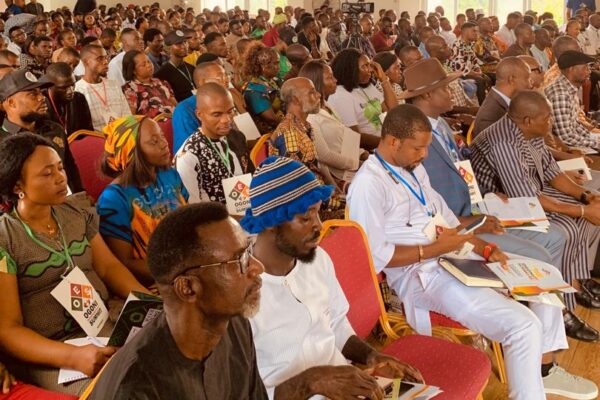
As the Ogoni Entrepreneurship Summit enters its day two, the momentum from yesterday’s conversations continues to build, setting the stage for deeper engagement, reflection, and action-oriented dialogue. Day One laid a strong foundation, highlighting the immense entrepreneurial potential within Ogoniland and reinforcing the need for locally driven solutions to economic challenges. Today, the summit shifts focus from vision-setting to consolidation, practical insights, and pathways for sustained impact. Day Two of the summit brings together entrepreneurs, thought leaders, policymakers, and development partners who share a commitment to translating ideas into actionable outcomes. The sessions are designed to deepen understanding around key pillars of entrepreneurship, innovation, access to capital, governance, sustainability, and enterprise growth, while addressing the realities faced by local business owners and aspiring entrepreneurs in Ogoniland. Building on the keynote addresses and discussions from the first day, today’s engagements aim to provide participants with practical frameworks, real-world experiences, and strategic guidance that can support business growth beyond the summit. Speakers will explore how entrepreneurs can navigate challenges such as limited funding, market access, and policy constraints while identifying opportunities within agriculture, technology, creative industries, small and medium-scale enterprises, and the green economy. Recognizing that entrepreneurship does not thrive in isolation but through deliberate partnerships among government institutions, financial organizations, private sector players, and community stakeholders, today’s session will focus on discussions that aim to strengthen the entrepreneurial landscape in Ogoniland. Day Two also continues to amplify the voices of young people and women, as Gbene Dr. Joi Nunieh will discuss their critical roles in shaping the future economy of the region. As the summit progresses toward its conclusion, the goal remains ensuring that the impact of the Ogoni Entrepreneurship Summit extends far beyond these two days.

Read More
Prof. Magnus Kpakol

Knowledge Before Capital: Lessons from Prof. Magnus Kpakol at the Ogoni Entrepreneurship Summit

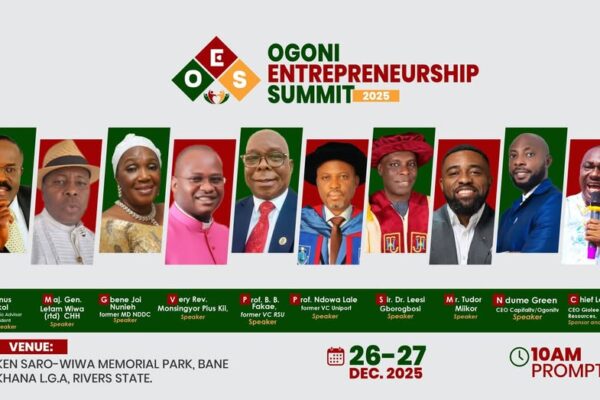
One of the standout sessions at the Ogoni Entrepreneurship Summit featured renowned political economist and business strategist, Prof. Magnus Kpakol, whose address challenged young people to rethink their approach to economic empowerment and nation-building. Drawing from decades of experience in economic planning and development initiatives across Africa, Prof. Kpakol delivered a thought-provoking session centered on initiative, knowledge, and self-driven development. He began by emphasizing that sustainable livelihoods cannot be built on dependence. According to him, young people must move away from the expectation that government or external forces will provide solutions and instead take personal and collective initiative in creating economic value. He stressed that entrepreneurship thrives where individuals are willing to take responsibility for transforming ideas into viable ventures. To illustrate his point, Prof. Kpakol referenced China’s economic transformation, noting that before 1978, the country was largely classified as a third-world economy. Its turnaround, he explained, was not accidental but the result of a deliberate shift toward entrepreneurial thinking, innovation, and productivity. He highlighted that China’s growth became possible because its people embraced the discipline of converting ideas into tangible development outcomes, a lesson he believes is highly relevant for Nigeria and Ogoniland. A major theme of his presentation was the importance of knowledge acquisition. Prof. Kpakol stressed that knowledge remains the most valuable capital for any entrepreneur, noting that financial resources often follow competence and insight, drawing inferences from his business concept. He shared personal experiences of pursuing knowledge in unfamiliar fields, describing how curiosity and continuous learning shaped his professional journey and prepared him for leadership roles in economic development. Addressing one of the most pressing challenges facing entrepreneurs, Prof. Kpakol acknowledged that access to business capital remains a major constraint in Ogoniland and across Nigeria. However, he challenged the narrative of scarcity, arguing that resources exist in abundance but are often poorly harnessed or mismanaged. According to him, when human capital, natural resources, and local innovation are effectively utilized, capital creation becomes a natural outcome rather than a barrier. Reflecting on his experience as a public office appointee, Prof. Kpakol also called on government at all levels to uphold integrity and accountability, noting that ethical leadership is essential for creating a business-friendly environment. He asserted that Nigeria does not need external intervention to resolve its investment challenges, as the country already possesses the human and material resources required to build a thriving economy. His session left participants with a clear message that the future of entrepreneurship in Ogoniland depends on initiative, knowledge, integrity, and the collective willingness to turn ideas into action.

Read More
Chief Lesi Maol

Convener’s Session: Chief Lesi Maol Sets the Vision for The Ogoni Entrepreneurship Summit

The Ogoni Entrepreneurship Summit opened with an address from the convener, Chief Lesi Maol, who set a clear vision for why the summit matters and what it seeks to achieve for Ogoniland. In the opening session, Chief Maol emphasized that the summit was a deliberate intervention aimed at repositioning entrepreneurship as a key driver of economic development, self-reliance, and long-term prosperity for Ogoni people. In his address, the convener highlighted the urgent need to move beyond conversations about challenges and instead focus on building solutions through enterprise. He noted that struggle remains a major part of the business landscape, and entrepreneurs must look towards building resiliency for their businesses to stand the test of time. According to him, the summit was designed to bridge these gaps by creating a platform where knowledge, opportunity, and partnerships can converge. The convener stressed that entrepreneurship remains one of the most sustainable pathways to job creation, youth empowerment, and community stability. He called on young people to embrace innovation, skill acquisition, and value creation rather than dependency, noting that the future of Ogoni’s economy lies in locally driven businesses that can scale beyond community boundaries. He also underscored the importance of starting small, noting that while he had started his business with just around 200,000 Naira, he is now giving out over 200 million Naira in funding. Chief Lesi Maol further reaffirmed the summit’s commitment to inclusivity, particularly the active participation of all local governments in Ogoniland. He noted that the funding would be shared evenly among the four local governments. Concluding his address, the convener expressed optimism that the conversations, connections, and insights generated at the summit would translate into tangible outcomes long after the event. He charged participants to take ownership of the knowledge gained, build strategic relationships, and remain committed to transforming ideas into impactful ventures.

Read More
Ogoni Entrepreneurship Summit

Ogoni Entrepreneurship Summit 2025: Inside the Plan to Rewrite the Economic Story of Ogoniland

Today marks a defining moment in the economic journey of Ogoniland as entrepreneurs, innovators, policymakers, investors, and development stakeholders converge for the Ogoni Entrepreneurship Summit. The summit represents a bold statement from the convener and CEO of Giolee Global Resources, Chief Lesi Maol, as well as other stakeholders, that Ogoniland is ready to move from economic potential to structured prosperity driven by enterprise, innovation, and local capacity. For decades, the Ogoni narrative has largely been shaped by environmental struggles and socio-political challenges. While these realities remain important, the Ogoni Entrepreneurship Summit deliberately shifts the spotlight to a new and equally powerful story of youth-led innovation and sustainable economic growth. According to the convener, the summit creates a platform where ideas meet opportunity, where local businesses are not just discussed but positioned for growth, visibility, and impact. At its core, the Ogoni Entrepreneurship Summit is designed to nurture tomorrow’s entrepreneurs by equipping them with practical knowledge, mentorship, and access to networks and funding that are often out of reach for grassroots business owners. Participants are exposed to proven business models, policy insights, and lived experiences from entrepreneurs who have built viable ventures in similar environments. This practical orientation ensures that attendees leave not just inspired, but better equipped to build and sustain businesses. The summit also bridges critical gaps between entrepreneurs and stakeholders. By bringing together government agencies, financial institutions, development organizations, and private sector leaders, it creates a rare opportunity for dialogue, collaboration, and partnership. This ecosystem-driven approach is essential for building an enabling environment where businesses can thrive, jobs can be created, and local wealth can be retained within Ogoniland. Importantly, the Ogoni Entrepreneurship Summit places young people at the center of economic transformation. As the most active drivers of innovation and enterprise, their participation signals a future where opportunity is inclusive and growth is community-based. Through mentorship sessions, panel discussions, and networking opportunities, emerging entrepreneurs gain access to guidance that can redefine their entrepreneurial journeys. As the summit unfolds, it stands as a call to action for key stakeholders to invest in local talent, to believe in homegrown solutions, and to collectively reimagine what economic success looks like for Ogoniland. Conversations from the summit are expected to ripple far beyond the venue, shaping policies, inspiring enterprises, and laying the foundation for a resilient, entrepreneur-led Ogoni economy.

Read More
KEN SARO WIWA FOUNDATION

Ken Saro-Wiwa Foundation Denounces “Fake” Reconciliation Event in Ogoniland

The Ken Saro-Wiwa Foundation has disowned a widely circulated photograph and accompanying news report, which claimed a “Record of Restorative Reconciliation and Collaboration in Ogoniland,” calling the materials “fake” and “stage-managed.” In a statement signed by Dr. Owens Wiwa, the Foundation said the event, centered on a tree-planting exercise, was neither authorized nor supported by the organisation or the Saro-Wiwa family. According to the statement, Zina Saro-Wiwa, the daughter of Ken Saro-Wiwa, was “tricked” into attending the event, which was allegedly orchestrated by a former head of the organizing committee who has since been dismissed by the Foundation. The trees planted during the exercise have already been removed, the group said. The Foundation stressed that despite suggestions in the disputed report, there has been no reconciliation between the Saro-Wiwa family and Shell, now operating under the name Renaissance. It reiterated that both Shell/Renaissance remain “persona non grata in Ogoni.” The statement renewed long-standing accusations against Shell, asserting that the company must be held accountable for environmental devastation in Ogoniland and for the role it allegedly played in the military repression of the 1990s, including the operations led by the late Major Paul Okuntimo. It insisted that full environmental remediation remains an unresolved obligation. While acknowledging ongoing clean-up efforts by the Hydrocarbon Pollution Remediation Project (HYPREP) as “a good first step,” the Foundation argued that technical remediation alone is insufficient. It called for political dialogue on the creation of a Bori State as a pathway to Ogoni autonomy and a necessary step toward genuine reconciliation between the Ogoni people and the Nigerian government. The organisation condemned what it described as “surreptitious” attempts by “agents of Shell and security operatives” to manufacture an image of peace, insisting the Ogoni people “will not capitulate” to such efforts. The statement reflects continued tensions nearly three decades after the execution of writer and activist Ken Saro-Wiwa and eight other Ogoni leaders, killings that remain central to ongoing disputes over oil extraction, environmental justice, and political autonomy in the Niger Delta.

Read More